
Advanced skin, hair, and laser care tailored to your concerns, with treatments focused on healthy, confident, and naturally glowing skin.
Vitiligo is a skin condition that occurs when melanocytes, the cells responsible for producing skin pigment (melanin), are damaged or stop functioning. This leads to the development of white or depigmented patches on different areas of the body. Although vitiligo is not contagious or life-threatening, it can affect appearance, confidence, and emotional well-being.
At Ameya Skin Clinic in Thane, Dr. Abhijit Raghuwanshi provides personalized vitiligo evaluation and treatment based on the type, extent, and progression of the condition. Our approach combines advanced dermatological therapies, medical management, and customized care plans to help improve pigmentation and achieve better skin appearance.

The exact cause of vitiligo is not always known, but it may be associated with:
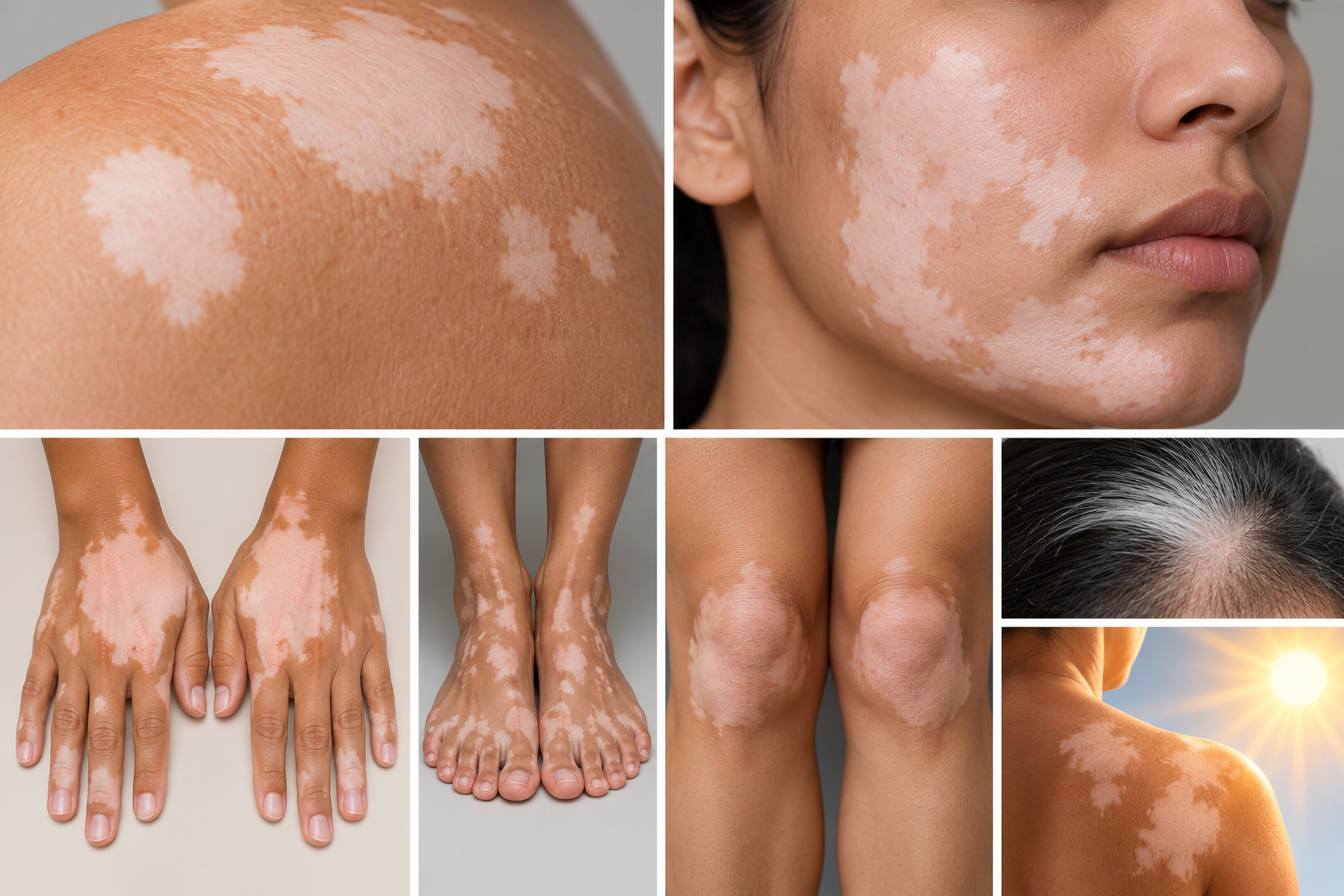
Treatment selection depends on factors such as the type of vitiligo, duration, affected areas, and disease activity. Treatment options may include:
At Ameya Skin Clinic, Thane, vitiligo treatment focuses on accurate diagnosis, understanding disease progression, and selecting the most suitable treatment approach for each patient. With advanced dermatology techniques, personalized care plans, and continuous guidance, we aim to support pigmentation improvement and help patients achieve better skin confidence.
If you notice white patches or changes in skin colour, consult our experts for timely evaluation and a customized vitiligo treatment plan based on your condition.
There is no single best treatment for everyone. Topical medicines, narrowband UVB phototherapy and targeted light therapy are among the options. The most suitable approach depends on the type, extent and activity of vitiligo.
There is no established permanent cure. However, treatments may help restore skin pigmentation and control disease progression. Recurrence is possible, and some patients require maintenance treatment.
No. Vitiligo cannot spread through touching, sharing food, using common household items or close physical contact.
Yes, vitiligo may progress rapidly in some individuals. New patches or enlargement of existing patches should be assessed by a dermatologist.
Some patches may regain pigmentation with treatment or occasionally without treatment. The extent of repigmentation varies, and certain areas, such as fingertips, can be more difficult to treat.
Topical medicines are generally applied without procedures, although irritation can occur. Phototherapy is usually not painful, but redness or irritation is possible. Surgical procedures involve different considerations, which should be explained before treatment.
Stress has been reported as a possible trigger or aggravating factor in some people, but it is not considered the sole cause. Vitiligo involves complex autoimmune and genetic mechanisms.
Yes. Vitiligo can develop during childhood. Treatment decisions depend on the child's age, affected areas, disease activity and overall health.
Vitiligo is associated with an increased likelihood of autoimmune thyroid disease. Thyroid testing may be considered based on the patient's clinical history and examination.
A qualified dermatologist can evaluate white patches, confirm whether they are caused by vitiligo and recommend suitable treatment. Patients in Thane can consult Dr. Abhijit Raghuwanshi at Ameya Skin Clinic for dermatological evaluation.
White patches on the skin do not always indicate vitiligo. An accurate diagnosis is important before beginning any pigmentation treatment.
If you are experiencing new, spreading or persistent white patches, schedule a consultation at Ameya Skin Clinic, Thane, to discuss your condition and available management options.